Explosions
Southern Nights #1


This is the first entry in the new Southern Nights series which documents the emerging industrial geography of the US South, with a particular focus on trends in the Southeast, and the role played by international capital backflows from East Asia in the region’s ongoing economic boom. (The name of the series is taken from the Allen Toussaint song shared below, made famous by Glen Campbell’s subsequent cover.) While doing research on Chinese firms’ investment in Tanzania for Hellworld, I soon discovered that the bulk of Chinese outbound investment through the 2010s was focused not on developmental megaprojects across the Global South but instead on mergers and acquisitions in the wealthy countries, intended to both acquire key sources of IP and to enter into higher-value consumer markets otherwise protected by regulatory barriers. This then redirected my attention back toward industrial and demographic dynamics in the US.
At the time, I had begun looking into Chinese investment in the US but never used the material in either my dissertation or the book, aside from a few asides. Moreover, as I saw how complex and diversified chains of capital from Asia were deployed in East Africa (irreducible to oversimplified stories of “China in Africa”), I also realized that similar chains were operating in the US itself, with particularly important roles played by capital from South Korea, Japan, Taiwan, and, increasingly, the Gulf States and Israel. As in East Africa, I found that the influence of Chinese firms was substantially less important than was portrayed in the media, especially relative to investment from these other locales. For the most part, Chinese firms have focused on major acquisitions (as in the Smithfield case I describe in the Introduction to Hellworld) rather than the sort of greenfield investment in plant and equipment made by Japanese and South Korean auto firms or Taiwanese chip manufacturers. Finally, in a telling turn of events, I myself was compelled by the vicissitudes of the job market to personally join the wave of in-migrants to the US South in search of work and, after relocating to the Nashville area, have found myself well-positioned to study these very trends.
The goal of this first post is simply to set the stage for the series as a whole, describing some of the major trends in migration and investment across the Southeast, all of which will be detailed on more focused posts in the future. Though this first entry zooms in on the Nashville area, where I am now based, it also briefly touches on a range of other areas, with particular note given to Huntsville and Decatur, which are emerging hubs in the Alabama manufacturing complex. Similar to my Social Materialism series, Southern Nights will be hybrid in nature, with posts paywalled for the first month and then made open access afterwards. This gives paying subscribers a free preview of the post as a thank you for their support while also making sure it remains widely accessible to all over the long term. Finally, if you or someone you know is employed in any relevant industries across the US South, please let me know, as I am looking for interviewees. As usual, please note that these blog posts are basically just running notes and drafts, not completed articles, and are only lightly edited for typos.
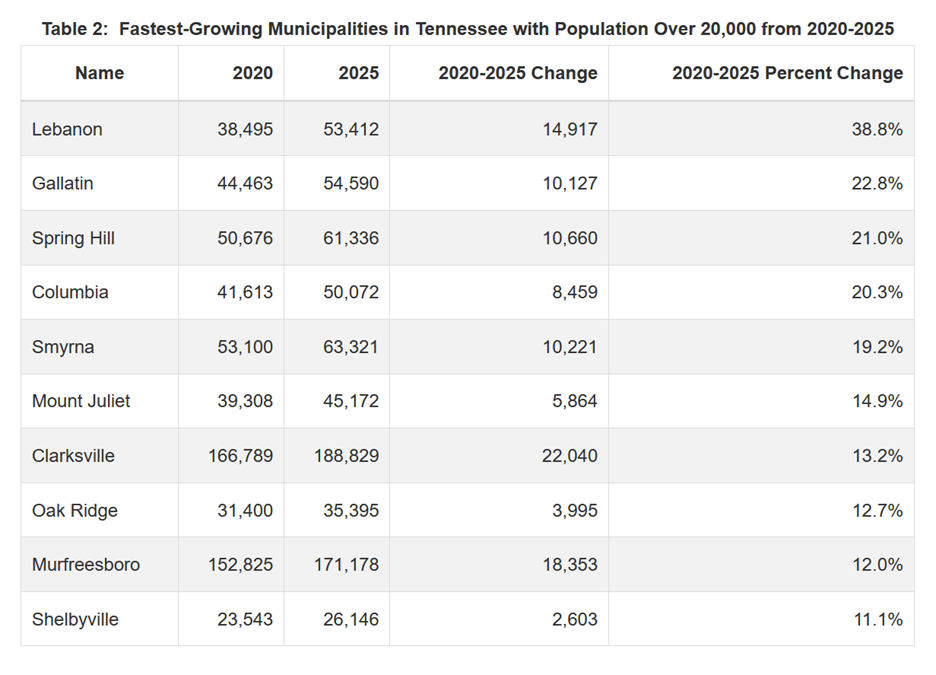
The ground shook and a black cloud rose in Bucksnort, an unincorporated area about an hour west of Nashville. Serving mostly as a rural satellite for the exurb of Dickson, one of the few direct employers in the area was Accurate Energetic Systems (AES), a minor military-industrial subcontractor that produced high explosives for the Department of Defense. The facility had suffered a minor explosion in 2014, and OSHA inspections in 2019 had found that the firm failed to give employees proper protective equipment. The same inspection also found high concentrations of cyclonite on basically all surfaces in the facility, including the breakroom. Two workers had already suffered seizures due to extended exposure to the chemicals. Similarly, workers reported regular safety violations such as “being told to step in and perform jobs they weren’t trained for, safety protocols like keeping floors wet to prevent an explosion being ignored, and explosive material left lying on the plant floor among trash.”[1] Now, the place where the factory sat is a blackened crater. Sixteen workers died and seven were injured in 2025 explosion, when a spark on the ground floor led to a chain reaction that ignited 24,000 pounds of explosives across the factory as management sough to ramp up production to fulfill a $120 million defense contract – one of many such contracts linked to sharp increases in military spending in the 2020s. The resulting explosion was equivalent to 11.8 tons of TNT.
Over the following months, Tennessee’s state-level OSHA led an investigation. Ultimately, they “cited the company for nearly 100 violations and proposed more than $3.1 million in penalties — the largest in state history,” but nonetheless a laughable sum, amounting to less than 3% of the contract that the workers died rushing to fulfill. To add insult to injury, the official response to the tragedy from AES was to provide “families with a barbecue food truck, a T-shirt featuring their loved one’s image, and a $50 Walmart gift card.”[2] Moreover, the larger plant remained operational, with the company calling workers back Monday morning for their shifts at other buildings on the complex. Without any sort of union or community-level organization, injured workers and the family members of the dead have had little recourse and have been forced to rely on a wrongful death lawsuit that seeks to shut the facility down by seeking $150 million in damages – though it remains unclear how much financial damage this would actually do to the firm, which is private and does not disclose its capitalization.
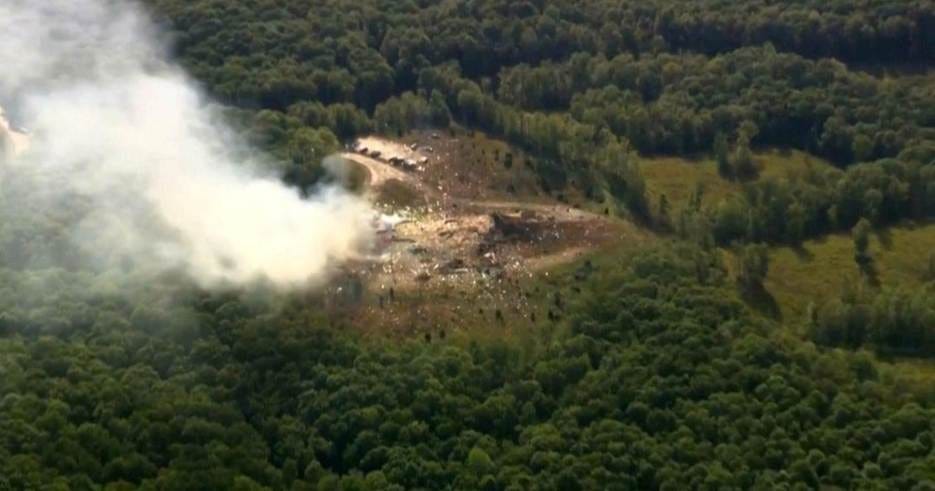
Only a few months earlier, a different explosion had occurred on the other side of the Nashville metropolitan complex, in the northeastern outer-ring suburb of Gallatin. Unlike the AES explosion, however, the Gallatin disaster was not industrial. Instead, a gas leak in a greenfield housing development saw a new-build home explode when the inspector arrived to make sure everything was up to code. Miraculously, the inspector survived. But the incident drew attention to the shoddy construction work going up across the sprawling new suburban developments in the greater Nashville metro area as well as the nearly-inexistent investments in infrastructure. While Tennessee itself ranked as the 9th-fastest growing state in the country between 2020 and 2025, with 5.8% population growth, the suburban and exurban ring around Nashville saw even stronger growth. This growth was driven by a push-pull dynamic where new investment drew record levels of new migrants from other US states and other countries while housing costs rose rapidly in a central city that had largely been demolished to make way for new high rises, entertainment strips largely serving tourists, and office towers for the healthcare and tech industries, and revamped state government offices. As in other rapidly-growing cities in the US, this resulted in a now-familiar triad: inner city gentrification, suburbanization of poverty, and the emergence of new clusters of tech capital both downtown and in select wealthy suburbs.
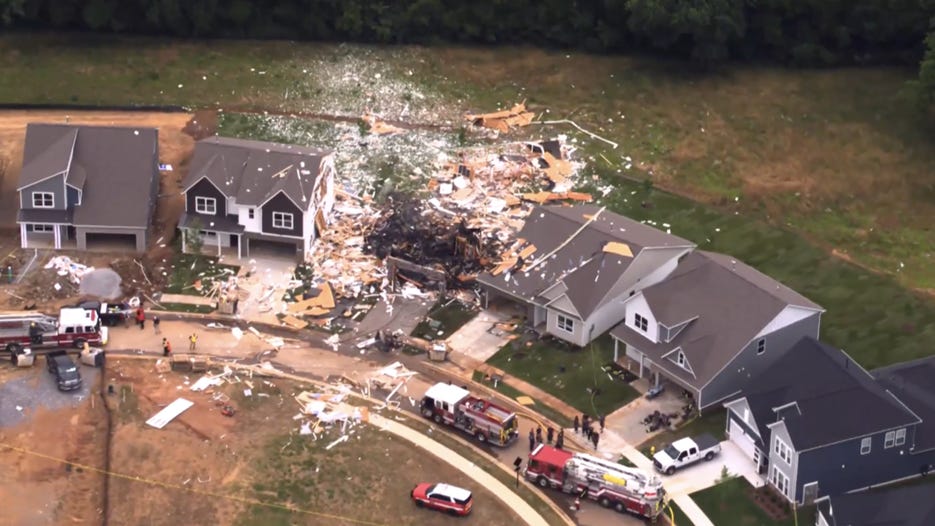
Gallatin had seen its population skyrocket by 22.8% between 2020 and 2025 (adding 10,217 new residents), while neighboring Lebanon had seen staggering growth of 38.8% (14,917), with similar trends in nearby Mount Juliet (14.9%), White House (37.3%) and Oakland (20.6%). Other areas that saw similar growth were southern outer ring suburbs like Thompson’s Station (27.2%), Spring Hill (21%), Columbia (20.3%,), and Smyrna (19.2%), as well as second-tier cities within the larger metro such as Clarksville (13.2%) and Murfreesboro (12%), alongside their affiliated suburban centers such as Shelbyville (11.1%). In fact, looking through a list of the fastest-growing municipalities in Tennessee, one can immediately see the spatial concentration of this growth in the Nashville area. Only Oak Ridge, near Knoxville, shows up on a list of the top ten fastest growing municipalities with a population over 20,000: