
Masses
Reading Hellworld #5

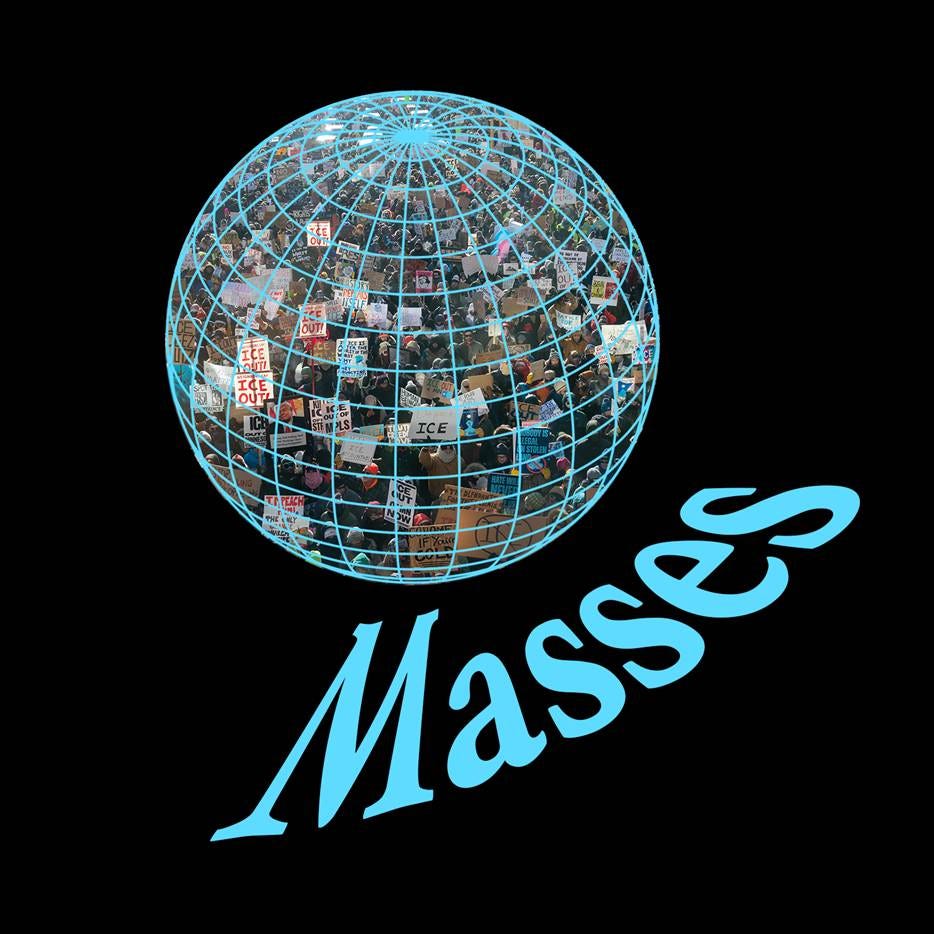
This is the fifth entry in the “Reading Hellworld” series, where I review and expand on various ideas addressed in the book. A few months ago, at the invitation of Historical Materialism and Notes from Below, I put together a release panel for Hellworld at the 22nd annual HM Conference in London. I then followed it with a brief post reviewing some of the issues raised in the discussion. Though this was originally intended to be a series of posts, political events in the Twin Cities soon turned my focus elsewhere. Now, as the conflict intensifies, I want to return to one particularly relevant question raised in that discussion: the role played by the rebellion in the overall process of building partisan subjectivity. This post will therefore explore exactly how we can understand the unique and necessary role of singular, mass-mobilizational “events” and nonetheless connect them to the broader process of partisan organization in and between these moments of open rebellion. As usual, keep in mind that these posts are rough-hewn, functioning in part as stream-of-consciousness notes.
Much of the political theory offered in Hellworld and further elaborated in subsequent pieces such as “Theory of the Party” hinges on the special function of mass-scale rebellions which, drawing from the work of Alain Badiou, I refer to as “events.” Though the book spends quite a bit of time tracing out the various structural features that make uprisings of this sort more likely, most of this is done in retrospect. Whether or not any given sequence of political conflicts amounts to an “event” of this sort only really becomes clear in its aftermath. Though we can gesture at certain conditions ahead of time and identify the most likely triggers, actually predicting where and when an event will occur or what, exactly, would constitute one, is notoriously difficult. Mass mobilization alone does not define the “evental” character of a given political struggle, as is clear from the large but toothless protest parades that form a standard part of liberal governance in many countries – think, for example, of the “No Kings” rallies earlier this year, the 2017 Women’s March, or even the run-of-the-mill general strikes put on by European unions.
Clearly, what is lacking here is a certain degree of conflict with the existing social order and an intensity of action: the idea that people are taking risks to commit these acts of protest against the regime, however they understand it. For the individual, this carries an intensity of emotion and ethical commitment unmatched in any other scenario. But, again, intensity and conflict are not on their own sufficient. Each can be observed in small-scale anarchist mobilizations or even within larger activist movements that nonetheless fail to gain mass purchase and would not, in any reasonable sense of the word, constitute a true political event. At the small scale, some of these struggles may play a similarly transformative function for individuals – and Badiou does theorize events that operate on this interpersonal scale. In certain cases, they may even bear a local resemblance to larger-scale mass events, exerting similar effects at this smaller scale. We can imagine, for example, that the Stop Cop City movement played transformative roles for many participants even if it did not constitute a true “mass” event of the same caliber as the George Floyd Uprising.
So what, exactly, is the difference? We can review the factors already evident: events must be intensive, conflictual, and massive. They are intensive in the sense that they serve as a platform for extreme forms of ethical action that entail deep emotional commitment and result in expansive forms of personal transformation. They are conflictual in the sense that they are not posed as petitions on those in power, nor do they function as social movements “advocating” for certain issues to be adequately legislated, but instead exert their own independent power and present themselves as rejections of the prevailing social order, however articulated. They are massive in the sense that they involve masses of people as the uprising generalizes beyond activist subcultures and local demographic clusters to draw in broader segments of the population, many formerly apolitical. This mass character then poses what Endnotes calls a “composition problem,” defined as “the problem of composing, coordinating or unifying proletarian fractions, in the course of their struggle.”
Though this problem is a limit to be overcome, insofar as it will tend toward the mythic projection of a populist pseudo-subject (i.e. the “people,” the “nation,” or simply the “movement”), it is also a generative process. In fact, the composition problem is key to understanding why certain forms of mass mobilization take on an evental character, while others fail to do so. In contrast to merely representative “movements” expressing the mandated interests of their relevant demographics, truly mass-scale social conflicts must at least attempt to dynamically synthesize a coherent political subject in the course of the struggle while also maintaining their distance from existing institutions of power. As a result, separate proletarian fractions are forced to engage with others and, in so doing, they begin to consciously confront their own social basis: their biases, their political predilections, their own limited range of experience. It is only through mass struggle that fragments of the class confront the living “unity-in-separation” that constitutes class as such. Moreover, through their very conflict with these other fractions all nonetheless generally aligned in the uprising, they are forced to think and practice politics as such. The “mass” is the class thrown into motion, or the class engaged in a productive, compositional conflict with itself.
Given this chaotic process of composition, Badiou refers to events as the “hysteria of the social.”[1] And it is only in this “hysteric” character – derived from the combination of the intensive, conflictual, and mass dimensions of the event – that uprisings are able to make contact with what, drawing from Bordiga, I refer to as an “invariant” communism continually regenerated through the movement of the historical party. Through their mass scale, the conflictual and intensive character of the event is able to create a social “torsion” or “rupture,” breaking through the status-quo in a hard-to-define but nonetheless undeniable way – often expressed as the sense that, after the rebellion, “everything has changed.” In Badiou’s terms: “The political capacity of the proletariat, which is called communist, is absolutely mobile, nonstatist, unfixable. It cannot be represented nor derived from the order that it exceeds.”[2] Moreover, it is absolutely irreducible to the given “architecture of the social” examined by political economy and, today, all forms of conventional social science, which leads to the form of representative politics that the event exceeds. In fact, this is a stricter definition of the event itself: an excessive rupture with the social which exceeds the expressive interests that naturally emanate from socially-given demographic groups and which, for this reason, take the form of what I refer to in “Theory of the Party” as “subsistence struggles” rather than properly political rebellions.
For Badiou, this fact is key to understanding the degeneration of Marxism itself: “Marx sets out, absolutely, not from the architecture of the social, deploying its assurance and its guarantee after the fact, but from the interpretation-interruption of a symptom of hysteria of the social: the uprising and parties of the workers.”[3] It is only by denying the incendiary core of communist politics that so many self-described Marxists have been able to reduce Marxism itself to its various vulgarities:
So-called Marxist political economy, as is well known, has not been able to perform the critique of its own critique… Economy, the critique of which was meant to track down what absolutely exceeded it in a singular point, has been the means by which Marxist politics, which is the interpretive precarity of working-class consciousness, the freeing up of a previously unperceived political capacity by why of a vulnerable scission, was bogged down in the trappings of a particular doctrine of the political.
What was supposed to be a strategy of the event, a hypothesis regarding the hysterias of the social, an organ of interpretation-interruption, a courage of fortune, finally has been presented by way of the economy as giving us a convenient measure of social relationships. In this way Marxism was destroyed by its own history …[4]
One of the major goals of Hellworld is to reunify the critique of political economy with a political commitment to the incendiary core of the communist project. (We might summarize the political philosophy of the book as something like synthesizing Bordiga and Badiou via Bonnano.)
Political events are necessarily insurrectionary moments and, due to their conflictual nature, are almost always presented as “riotous” and “violent” within the prevailing ideology. As we have seen in Minneapolis, this attribution will occur regardless of whether there is substantial property destruction or active assaults on figures of authority (i.e. the activities that conventionally constitute a “riot”). Nonetheless, by mobilizing power independent of the “appropriate channels” and in conflict with the powers that be, the political event will always carry at least a potential destructive force. Events can emerge out of strikes, out of conventional protests, out of neighborhood organizing, or any other form of subsistence struggle. After they emerge, however, they summon the specter of insurrection and, in so doing, are forced into combat with the state whether they like it or not. In this respect, they then exceed the simple expressive demands of the subsistence struggles that triggered them. Because of this, those who support the event and those who elaborate any political theory centered on it are often seen as simply cheering on riotous behavior or even reducing the concept of political struggle as such to a purely voluntarist theory of insurrection.
This is particularly true of whatever theories have been seized on in the moment of struggle and in its aftermath. Throughout the cycle of struggles in the 2010s, for example, the work of Endnotes, cited above, became a major touchstone for attempting to articulate the character and limits of, first, populist public-square-based protests (ranging from the Arab Spring to Occupy to the European Movement of the Squares) and, second, the new series of anti-police uprisings in places like the US, UK, and France. As noted in my previous post, many participants in these struggles were attracted to texts by Endnotes in large part because they had themselves confronted the practical limits of such struggles. Badiou’s theory served a similar function. Within the subcultural milieus that emerged from these struggles, this theory was also placed alongside material from Tiqqun / The Invisible Committee and a range of Insurrectionary Anarchist texts by figures like Bonnano, which resonated with other aspects of the experience. Perhaps due to this subcultural proximity, key differences between these strands of theory were ignored, as was any distinction between mobilizational texts written for propagandistic effect and theoretical texts making more expansive claims.
Soon after, through truly astonishing contortions of the mind, groups like Endnotes somehow became associated with a theory of struggle that supposedly imagined deepening economic crisis would result in a proliferation of “spontaneous” riots, which would at some point overspill into insurrection, and insurrection into a revolution that would naturally take on communizing measures – the entire process perhaps requiring a few key “pushes” by insurrectionary militants or autonomously-organized “communities.” No one with even the most modest degree of reading comprehension can believe that such a schema has anything to do with the position put forward in any of the texts produced by Endnotes. Nor is this even an accurate description of the theory of insurrectionary anarchists like Bonanno. In fact, this position cannot even be said to exist as a theory, since its core arguments are not made by any theoretical current. At most, it is the summation of a pre-political, aesthetic sentiment – a widely-prevailing ideological idea of how “revolution” might work – held by a certain subset of people who have never been thrown into any living struggle. While certain propagandistic texts might be designed to resonate with this sentiment, it is not an argument made by anyone in any circumstances other than the inchoate sort of political debates that arise online, streetside, or in assemblies among very recently politicized participants.
Completely counter to this impression, theories that place an emphasis on the role played by mass-scale uprisings tend to emphasize the limits to struggle revealed in these moments. For Endnotes, drawing from Theorie Communiste, the form of the riot is itself a limit, alongside other “circulation struggles,” indicating an inability (geographic or otherwise) to break through the “glass floor” into the sphere of production and compose a coherent subject of revolution across disjointed fractions of the class. Nonetheless, it is only the social rupture of the event that opens the space for the formation of a partisan subject, constructed in fidelity to the spirit of communism normally inexistent within the prevailing social world but briefly incandescent in the moment of this rupture. There is, quite literally, something magical about the event insofar as it makes things that once seemed impossible into possibilities seemingly overnight. Even after this window of possibility closes, the social field from which it emerged is irrevocably changed precisely because a trace of the event remains. In Badiou’s terms, a collective “body” can be constructed to articulate this subjective force: “a post-evental body is constituted by all the elements of the site which invest the totality of their existence in their identity to the trace of the event … the body is the set of everything that the trace of the event mobilizes.”[5]
Nonetheless, it is only the social rupture of the event that opens the space for the formation of a partisan subject, constructed in fidelity to the spirit of communism normally inexistent within the prevailing social world but briefly incandescent in the moment of this rupture. There is, quite literally, something magical about the event insofar as it makes things that once seemed impossible into possibilities seemingly overnight. Even after this window of possibility closes, the social field from which it emerged is irrevocably changed precisely because a trace of the event remains.
But what does this actually look like? The Twin Cities offers a practical case study. In 2020, the most significant mass rebellion of our lifetimes (so far) began in Minneapolis. With the world illuminated by the flames of a burning precinct, previously impossible things became possible, and occluded truths only spoken in private became public facts. As the uprising cascaded across the country, Minneapolis also became the center for the development of new networks for mobilization and mutual aid (some repurposed from infrastructure already being developed for pandemic response), developed to meet the immediate tactical limits faced by participants. Afterwards, this collective, tactical intelligence would be preserved in a partial fashion. Few of these networks actually survived through the subsequent years, but many lay dormant and many more people carried the experience with them. Similarly, many involved in the rebellion saw how these initial networks ran up against the initial limits of the uprising – their logistical bottlenecks, their inability to spread further into the neighborhoods, and the frictions that ensued when legal and illegal channels crossed. In the aftermath of the uprising, individuals who had participated began to reflect on the possibilities of what kinds of community infrastructure would be necessary for their abolitionist goals. Altogether, these bits of experience and infrastructure served as the seeds for the rapid response networks and mutual aid groups combating the federal invasion today. This is the thread of subjectivity which, however spare, traces out the lineage of “a post-evental body.”
In fact, the connections run deeper still. Today’s networks echo the decentralized organizing of Anti-Racist Action (ARA), founded in Minneapolis in the 1980s. Similarly, ARA was carrying on the radical heritage of the community patrols set up by the American Indian Movement (AIM) in the city in the late 1960s. Even further, we find echoes in the workers’ societies and “mutual benefit associations” and their affiliated community halls, which became hubs for working-class organization in the city throughout the latter 19th century. This living lineage of struggle, amplified by uprisings, also persists in their absence – albeit in a reduced or dormant form, shaped also by the defeat and ossification of earlier struggles. However, when these defeats are extensive and the heritage of the uprising is institutionalized, this memory lays dormant for long periods of time. The cadence shifts, prioritizing preservation through a long winter of repression. When the next spring of history arrives, this memory can be reactivated in new ways. We are forced, continually, to start again as if from nothing, only to rediscover our own buried history.
When the historical party begins to stir, this subjective lineage can then begin to reaggregate. In such periods, each moment of mass organization spurred on by the uprising is closer in time to the last, meaning that more people carry this experience between periods of mobilization and that the organic infrastructure built up in the moment can more easily survive until its next nourishment. As a result, the process moves faster: those who have retained fidelity to the spirit of the last uprising prove themselves in the next event, carrying forward lessons learned. Meanwhile, those who have failed to retain this fidelity are more easily revealed when they turn against the next uprising, spreading the same old counterinsurgent lies. When this cadence of struggle increases, subsequent events can become more intense, more conflictual, and more massive, in part because they are able to build on this experiential infrastructure. Partisan organizations can develop iteratively and in interface with the pre-political forms of organization emerging at the mass scale. Minor mutual aid networks hastily formed to respond to pandemic shortages and distribute goods in the midst of the uprising in 2020 evolve into more expansive infrastructures sustaining longer conflicts with the state and, from there, they can perhaps take an increasingly independent character as neighborhood assemblies, defensive militias, and associations of workers at some point in the future.
Already, we can see the siege on the Twin Cities taking on evental proportions. It is triggering a mass-scale transformation in popular consciousness, it has irreversibly transformed the local landscape of class conflict, and it is beginning to inspire similar mobilizations elsewhere despite the harsh winter. Nonetheless, we also see both the organic theory and practice of the revolt hitting its limits. In such conditions, we must remember that there exists a distinction between popular revolt as such and the partisan project. The key dynamics to track are the feedback loops built between the “masses,” understood as the class in motion, and the narrower subset of partisans produced by this mass activity, who attempt to articulate its immediate tactics into larger strategies, seeking to expand the possibilities for true social transformation. In classical parlance, this dialectical process of mutual transformation was what the “mass line” once referred to, at least in theory. Without any engagement with masses of people building their own practical forms of power and articulating their organic politics-in-motion, any organization of partisans will fall into cultish insularity and either decline to irrelevance or spiral into the self-destructive madness of terroristic adventurism. By the same measure, however, mass mobilizations with no partisan element attempting to push them beyond their immediate limits and interrogating their presumptions are left to slide down the path of least resistance into defeat and institutionalization.
The accuracy, argumentative merit, and general attractiveness of any given theory only matter if that theory is attached to tactical practices capable of overcoming immediate limits within the uprising. For this reason, subjectivity is elaborated at first through practical invention.
The most important aspect of this process is tactical. As explained in Hellworld and further elaborated in “Theory of the Party,” political struggle is not primarily discursive, despite its post facto appearance as such. The accuracy, argumentative merit, and general attractiveness of any given theory only matter if that theory is attached to tactical practices capable of overcoming immediate limits within the uprising. For this reason, subjectivity is elaborated at first through practical invention. Partisans must therefore be concerned with indexing and documenting the collective, tactical intelligence of mass action, identifying the limits of existing tactics, and experimenting with interventions that can overcome these limits, all of which require deep levels of collaboration and engagement with the mass of participants. In Minneapolis, for example, we have seen a continual process of tactical invention:
Mutual aid networks repurposed into clandestine support for migrants
Rapid response networks growing in complexity through formalization, all while retaining the necessary flexibility of decentralization
Mass tactical intelligence around confrontations that enable ambient participation across the population, such as the widespread use of whistles to alert those in the area to the presence of ICE
Continual attempts to conduct economic shutdowns which, though falling short of a real “general strike” (and often failing to stop work at any major employer), have revealed deeper tactical limits: what sort of businesses were actually shut down, why weren’t others, who treated the event as a mere rally, which labor organizations supported it in practice as well as in word, what would be required to actually shut down key economic functions in the city, etc.
The emergence of experimental new tactics such as the filter blockades, intended to exert greater power over space at the neighborhood level and effectively relocate the point of conflict to predictable nodes where protestors and equipment are already assembled.
None of this means that theory and strategy are unimportant, only that they do not exist in the abstract. Theories and strategies are only manifested in action, and even their discursive elements often emerge from deliberation and experimentation within the various spaces of the revolt. The theoretical or strategic role of partisans in such an uprising is therefore not simply to enter into it and fight for their invariably “correct” theory to be adopted. Instead, it is to create a circuit with the organic intelligence of mass activity itself that allows a strategy to emerge through the conflict of the folk theory of the movement and the critical theory of partisan organizations. Once plugged into the tactical interface, it is therefore important to document what folk theories of social transformation these uprisings are producing and formulate critical partisan engagements with these theories, attempting to draw out their kernel of truth while also demonstrating how their strategies fail to achieve true social transformation.
Since at least the mid-2010s, “abolitionism” has arisen as the organic theory of revolt, indexing a broad range of arguments all loosely oriented around opposition to an increasingly onerous system of prisons, policing, militarism, and general surveillance referred to as the “carceral state” and presented, more or less, in the terms of a race-critical left populism – i.e. a political theory that portrays the police state as a threat to “the people” in general, prefigured by specific threats to racialized populations both at home and abroad. but The organic political strategy of abolitionism is similarly broad, but generally pairs grassroots community organizing (“we keep ourselves safe”) both within and beyond formal non-profits with institutional measures aimed at defunding carceral systems (“defund the police”) and redistributing these resources to both institutional social services and grassroots organizations serving much the same function. Often, this overlaps with socialist liberal calls to tax the rich and reestablish public infrastructure for guaranteeing food, shelter, healthcare, etc. Each new cycle of struggles elaborates on preceding folk theories, often deepening them and/or directing collective attention toward previously untreated dimensions of power. So far, the uprising against ICE appears to be largely in line with preceding abolitionist trends and faces many of the same limits.[6]
At the theoretical level, like any form of vaguely populist folk politics, abolitionism tends to take the surface appearance of power at face value, focusing on the “political” sphere, in the limited colloquial sense of the word, and contrasting it to the organic “community” of the neighborhood. It is largely defined in the negative. As Jasper Bernes has noted, the result is that the abolitionist impulse also quickly undermines any fixed definition of the term, such that “abolition comes to mean everything and nothing.”[7] At its best, it is simply a method for rendering a more general rejection of the existing social order into everyday language. And, as Bernes notes, this gut-level abolition seems to trend in this direction, since it becomes impossible to imagine the abolition of police without also at least broaching the question of abolishing the property system that they uphold. Nonetheless, insofar as any “economic” dimension is considered, abolitionism appraises it largely in terms of appropriation, distribution, and institutional labor relations, mostly avoiding issues of production and exploitation. At best, abolitionists might advocate for a murky, left-liberal cooperativism.
In most cases, this amounts to the standard populist critique of “crony” capitalism, though usually rendered in abolitionist texts as “neoliberalism.” But even among the various “scholar-activist” strains of abolitionism that do attempt to link the critique of the carceral state to underlying economic dynamics, the approach remains one centered on appropriation rather than exploitation, loosely derived from the faulty theory of “accumulation by dispossession” put forward by figures like David Harvey and ultimately rooted in an externalist theory of crisis of the type originally formulated by Luxemburg – in which capitalism relies on the plunder of some non-capitalist sphere as the ultimate source of value and, therefore, faces crisis when this sphere of appropriation shrinks. Hellworld offers a critique of this position (the “fable of the parasite”), rooted in the work of William Claire Roberts.
The point, however, is not simply that abolitionism is “wrong.” Abolitionism is a genuine expression of mass politics. Though we would go too far to say, as Bernes does, that abolition is “the name of the revolutionary example” or the name “for the soviet without councils of the movement and its revolutionary partisans,” abolitionism is nonetheless the organic folk theory of our era of struggles.[8] It is similar, in kind, to theories of “neo-feudalism” or “technofeudalism,” insofar as it is a theory elaborated from real trends in capitalist development, albeit one that remains stuck within the alienated appearance of these trends. The “new feudalism” argument, for example, observes the link between rising corporate power and the fact that flows of value throughout the system take on increasingly rent-like characteristics – and also involve an increasingly powerful cadre of landlord interests fattened by the boom in real estate assets – to mistakenly argue that rents have displaced profits within the core economic mechanisms driving society, and that appropriation has thereby displaced exploitation at the core of the system’s social logic.
In much the same fashion, abolitionism observes the very real growth in the importance of the state, and particularly the military-industrial aspect of this growth, as well as real trends in the shifting structure of global racialization, and extrapolates from this an organic anarcho-liberalism premised on “communities” mobilizing to abolish parasitic institutions and replenish the social capacities of the state. Though often portrayed in anti-state language, abolitionism is in fact geared toward restoring the state to its status as a genuinely representative institution emanating upward from the community level and serving as the universal guarantor of social equity. Whether acknowledged or not, the ultimate focus of most abolitionist theory is simply on rearranging flows of value in a more equitable fashion, rather than “abolishing” value as such. Beyond the overtly repressive functions of the state, the quasi-revolutionary theme of “abolition” is therefore replaced by themes of moderation and steady, community-driven reform.
This is precisely why such a substantial chunk of the liberal-minded abolitionists who had participated in the uprising in 2020 were then able to be absorbed into the state under Biden, whose administration did, in fact, funnel large amounts of money into local governments and affiliated community services via the American Rescue Plan Act. As a result, crime rates have fallen to their lowest rates in over half a century despite simultaneous declines in police forces – due not to any “defunding” (which never occurred) but instead because of record retirements and a surge in cops quitting their jobs after 2020.[9] We can see much the same outcome when the present revolts are defeated by, on the one hand, the repressive arm of the state and, on the other, by the Democrats successfully coopting popular anger and channeling it into a sweep of the midterms and, ultimately, the reconquest of executive power, imposing a regime similar in kind to Biden’s, though likely much worse – even more committed to warmongering, more compromised by corporate interests, and naturally retaining and building upon Trump’s new detention infrastructure.
Rather than simply proving theoretical shortcomings, however, the point is to offer a hands-on engagement with the mass activity producing such theories that both demonstrates the dead-end strategies that will ensue from them and offers a feasible alternative. Though this requires that certain criticisms be articulated in the recognizable language of this folk consciousness, the primary interface is tactical, not discursive. All this can only be done through a continual, critical, and practical engagement with mass politics as it actually exists, helping to draw out and amplify the tactical innovations emerging from mass mobilizations regardless of the language they are expressed in. When the same abolitionist politics is articulated today, the absorption of certain strands of abolitionism into the Biden program offers a useful counterpoint demonstrating how this theory might lead to a strategic dead end. But the ultimate point is simply that these debates only have any traction in the midst of mass mobilizations where there are real tactical choices to be made: How would we, as a particular group of protestors in this particular place, relate to local efforts to channel the movement into the electoral sphere in order to make an impact in the midterms? How should we deal with self-appointed yellow vest activist-informants? Does and should the movement rely on existing union infrastructure to make inroads into the economic sphere and, if not, how might it build power in the workplace?
The only real way to overcome the limits of any folk politics is to create infrastructures through which these politics can be contested and practical alternatives formulated. This requires both creating platforms to connect participants beyond moments of mobilization – in this case, neighborhood assemblies or other associational structures (in the workplace, for example) – and counter-infrastructures where a variety of other tactical paths can be pursued without devolving into internecine battles between leftist factions. Exactly what this looks like is impossible to say in the abstract. In Minneapolis, the formation of neighborhood assemblies and associations at workplaces and schools seems to be the most likely path forward, alongside ongoing efforts to increase the resilience and capacity of existing networks faced with ratcheting repression and invent new tactics like the filter blockades. But this is ultimately a question for those on the ground. Elsewhere, especially in red states where ICE activity is still largely performed through normative channels – i.e. via the police and court systems rather than in spectacular streetside confrontations – the immediate necessities will be drastically different. In these cases, the question is whether any sort of mass-scale politics can emerge and, if so, what might trigger this process?
[1] Alain Badiou, Can Politics Be Thought?, Durham, NC: Duke University Press, 2018. p.38
[2] ibid
[3] ibid
[4] ibid pp.33-34
[5] Alain Badiou, Logics of Worlds, London: Continuum, 2009. p.467
[6] Perhaps the key shift is that the organic theory of revolt today approaches a more clearly anti-imperialist stance, given both the immediately international character of migrant defense and the context of renewed US intervention overseas. But this then adds new limits, as true anti-imperialism easily devolves into naïve grass-is-greener support from afar for any form of capitalist development pursued by any fraction of elites not in an obvious compradorial relationship with US capital.
[7] Jasper Bernes, The Future of Revolution: Communist Prospects from the Paris Commune to the George Floyd Uprising, New York: Verso, 2025. p.169
[8] ibid
[9] Henry Grabar, “The Great Crime Decline is Happening All Across the Country”, The Atlantic, 21 January 2026. <https://www.theatlantic.com/ideas/2026/01/great-crime-decline/685695/>