
Katabasis
Soundtrack to Hellworld #6

Below is the sixth entry in the “Soundtrack to Hellworld” series, covering Chapter 6, “Hell Money.” The guiding metaphor within this chapter is the theme of katabasis explored in the book more generally: a journey through the underworld, using the example of Emperor Taizong’s trip to hell in Journey to the West to illustrate the complex cosmological, governmental, and financial links between the mundane sphere and the numinous realms of heaven and hell that structure rituals such as the burning of joss paper during the Ghost Festival. These cosmological themes then serve as an illustration of how the basic structure of the capitalist state emerges from the need to manage a process of social reproduction continually riven both by intra-class conflicts between fractions of capital and by the recurrent tumult of economic crisis and proletarian rebellion – all viewed through a brief political-economic history of Hong Kong.
Here is the opening scene, which sets the tone:
… a man squats down and uses his cigarette to kindle another ceremonial fire under a bundle of hell money modelled after US federal reserve notes, one side emblazoned with the face of the Jade Emperor, the supreme figure of heavenly authority, and the other with Yanluo, judge of the dead and fifth and foremost of the ten kings of the underworld. Once burned, the money and other joss paper offerings are transferred to the wandering dead. This commerce in fictitious goods passing in fire through the alleyways therefore poses itself as an ironic counterpart to the flows of fictitious capital coursing through the skyscrapers above – the city one of the world’s most important financial centers – rendered in ghostly digital ledgers that count out, allocate, and proliferate that great global pool of value bled out of the factory cities and accumulated here, where the hungry ghosts walk in the shadow of the stock exchange.[1]
As this entry suggests, the hell that illustrates the chapter is the syncretic hell of the Chinese underworld, influenced by both Buddhist and pre-Buddhist folk traditions, and intentionally contrasted to the Christian hell of Dante’s Inferno:
The differences between the many portrayals of the afterlife within the Chinese cultural imaginary and the one immortalized in the Western canon by Dante are too numerous to be listed here and too fundamental to offer any easy cosmological comparison. But maybe the most distinctive is the fact that, in the Chinese case, the underworld is governed much like our own. Though separate, the barrier between the two sphere is also permeable, with the most common stories of katabasis being, on the one hand, cases in which bureaucratic errors see the wrong individual brought before Yanluo and the other kings of hell to be judged – usually the error is corrected and they are released, often after being given a tour – and, on the other, those in which various forms of guile and corruption are mobilized to win an extension of life for the person in question.
…
In the images of hell recounted in such tales of katabasis, we find a picture of the bureaucracy itself as something like the differentiated social fabric that unites the distinct spheres of earth, underworld, and heavens, complete with collusion, corruption, and clerical errors at every level. Similarly, the ritual of burning joss paper signals a certain continuity of economic power as well, with spirits in need of offerings of money and possessions to ensure their successful reincarnation.[2]
This is not to say, however, that the hell of the Occident doesn’t also mirror the mundane world in its own way. As Chapter 3 notes in its comparison of Xu Lizhi’s poetry to that of working-class poetry from industrializing England, infernal themes have long been common methods of illustrating the capitalist factory. In fact, Dante’s own illustrations of hell were inspired, in part, by his visit to the Venetian Arsenal, a shipbuilding facility that was, by the 1300s, one of the world’s most advanced industrial facilities, complete with an intricate division of labor:
The whole plant had the structure of a big manufacture, with strict internal division of labour under the unified despotic authority and administration of the representatives of the [Venetian] Commune: a hierarchical structure was formed comprising directors, foremen, masters, skilled and unskilled workers and apprentices.
After Dante Alighieri’s visit to the Arsenal in 1320, “the biggest and busiest spectacle of industrial activity that Dante ever saw, or could have seen, the biggest of the time,” he depicted hell in his Divine Comedy as a place similar to the crowded and oppressive landscape of the Arsenal.[3]
In fact, Dante depicts the literal work conducted in this early factory as itself a form of infernal torture, in which the damned engage in industrial labor for all eternity:
As in the arsenal of the Venetians
Boils in the winter the tenacious pitch
To smear their unsound vessels o’er again,
For sail they cannot; and instead thereof
One makes his vessel new, and one recaulks
The ribs of that which many a voyage has made;
One hammers at the prow, one at the stern,
This one makes oars, and that one cordage twists,
Another mends the mainsail and the mizzen;[4]
Given these themes, I decided that the playlist for this chapter should center on Chinese metal and, in particular, metal that sounds somewhat infernal. Similarly, given that much of the chapter focuses on the theory of the state and the formation of distinctly national blocs of capital (in general, as well as within Hong Kong and mainland China, specifically), I’ve made sure to include a range of “traditionalist” metal, drawing from traditional Chinese music (Zuriaake, Deep Mountains, etc.) and playing on nationalist themes (Black Kirin, Holyarrow). Otherwise, the range is relatively open.
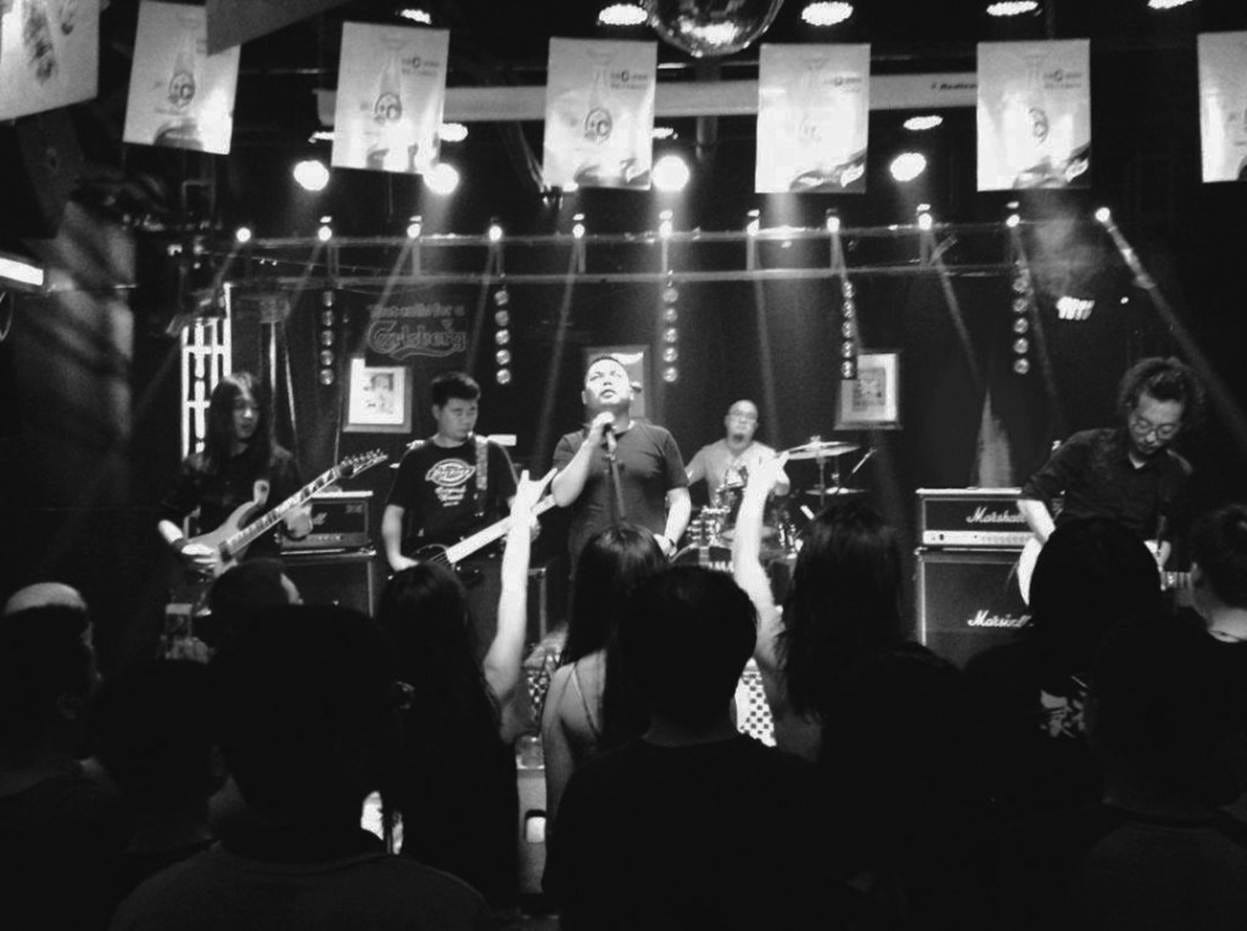
As usual, Concrete Avalanche has been an important resource, particularly for background information, such as the fact that Liu Zhenyang, of Vitriolic Sage, is also the person behind Ὁπλίτης (Hoplites), with feminist lyrics sung entirely in ancient Greek:


Liu himself is a linguist and uses the project as a form of experimentation. In his own words:
…using ancient Greek is like doing an experiment. There are many experimental musicians. Some started playing noises [sic] while others started playing atonal stuff. I don’t think there are musicians that approach it from a linguistic angle …
My angle is bringing a dead language back because I think that’s interesting. But still, I’m not the first person to do that. There have been other people who have experimented with that. Plenty of black metal bands, like Mayhem, use Latin in their albums, though they’re all grammatically incorrect. Deathspell Omega did as well, but regarding them, I like a sentence I wrote in another interview about it: “Satan couldn’t understand your improper Latin.”
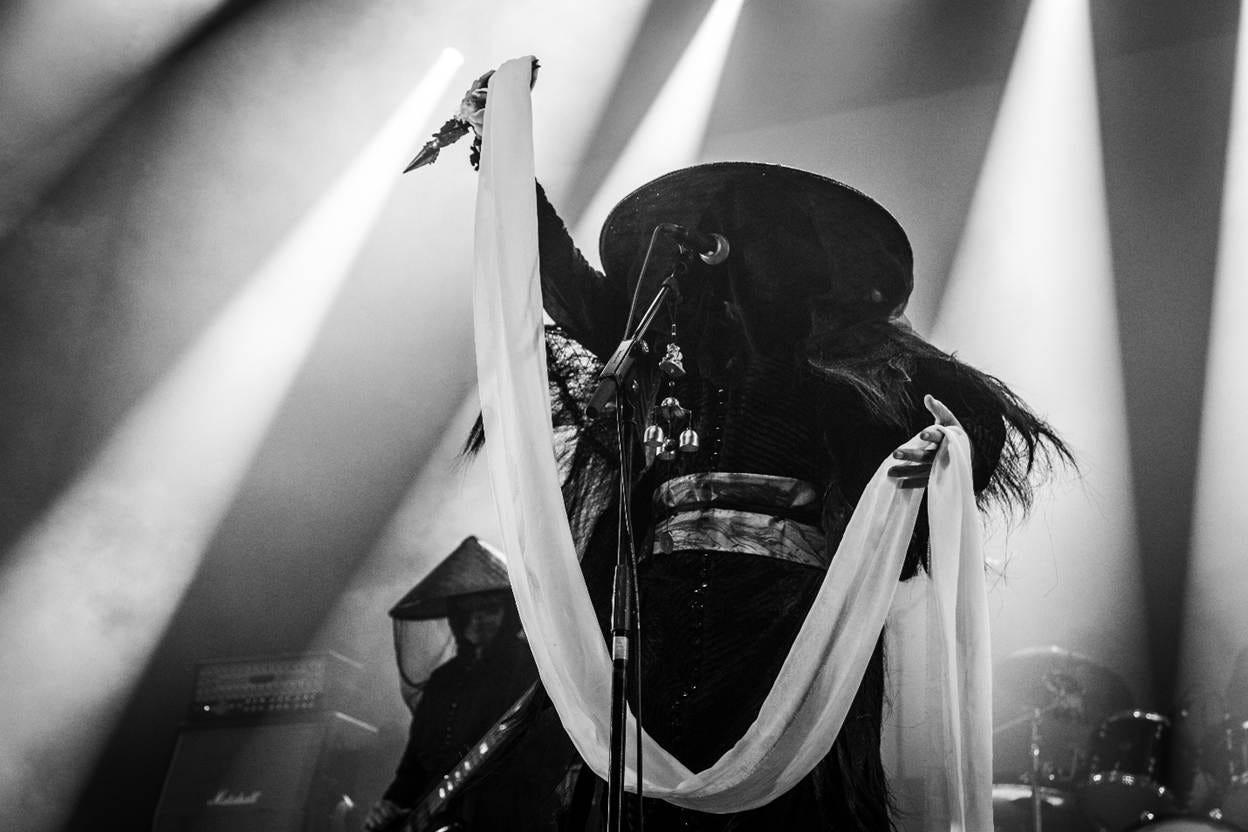
Similarly, the use of traditional instruments constitute their own form of experimentation. Black Kirin, for example, uses the guzheng, the erhu, and the xun in various tracks. Zuriaake write lyrics inspired by ancient Chinese poet Qu Yuan (屈原) and wear costumes inspired by a line from the poem “Winter Snow” (江雪) by Tang Dynasty poet Liu Zongyuan (柳宗元):
千山鳥飛絕
萬徑人蹤滅
孤舟蓑笠翁
獨釣寒江雪A thousand mountains, not a bird in sight
Ten thousand paths, not a human track
Alone in a boat, wearing a straw cape and hat, an old man sits
Fishing alone, in the winter snow
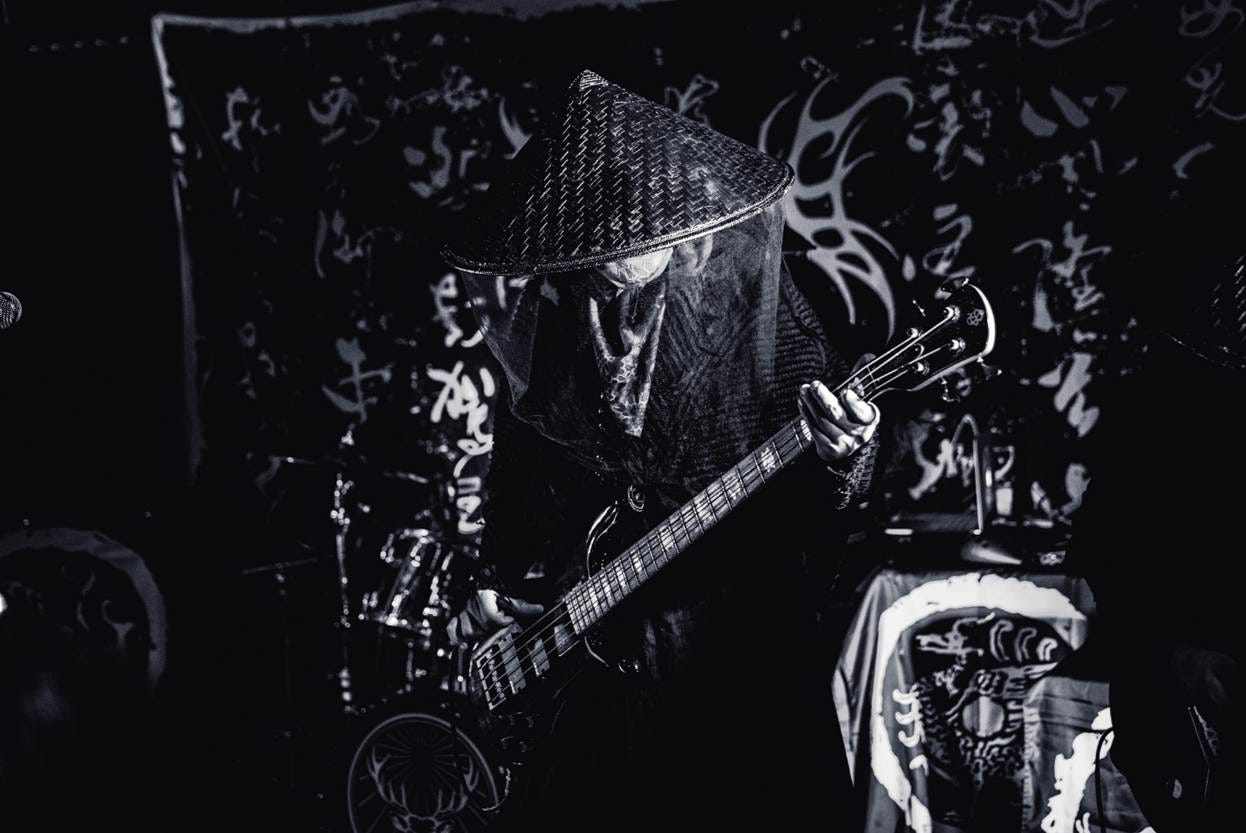
Zuriaake is among the oldest of the Chinese metal bands still recording, formed 20 years ago after the founding members met in markets selling smuggled cassette tapes from the West.[5] Despite these Western influences, however, the group is firmly grounded in contemporary Chinese classicism. In their own words:
A lot of our inspiration comes from these traditional Chinese folk sources, which we heard throughout our childhood. We’ve forgotten some of them, but their sounds still exist somewhere in the depths of our minds. We also turn to all the Chinese ancient stories, including myths and Chinese ghost and god culture. Chinese people don’t believe the world only has one god.
Zuriaake focuses on words [Chinese written characters] first, then music. This is how ancient Chinese culture works. China is a country that deeply worships its written language. We think our forefathers created the most beautiful and meaningful poems in the world. Chinese characters have their own souls. We engrave them on every single one of Zuriaake’s songs, blend them in every single drop of our blood.
The Nanchang-based label Pest Productions is by far the most important resource for anyone interested in the Chinese metal scene (and beyond, as they release music from groups all over the world). See, for example, their “Death Kult Over Black Congregation” compilations, which are often loosely thematic. The first two focus on Chinese black metal:
The third covers a broader range:
More recently, they released another edition featuring Chinese black metal tributes to the Miura Kentaro’s manga, Berserk:
Given the limited selection available on Spotify, Pest Productions is also the best source for material left off the playlist below. For example, the blackgaze project DeadTrees:
Hong Kong depressive black metal outfit DISMAL:
Vancouver-via-Shanghai experimental black metal Gold Cat Pagoda:
Or the neofolk project 錦瑟 Brocade:
Of what is available on Spotify, nearly all was originally released via Pest Productions. Here is the final playlist:
[1] Hellworld, p. 301
[2] ibid, pp.302-303
[3] John Milios, The Origins of Capitalism as a Social System: The Prevalence of an Aleatory Encounter, New York: Routledge, 2018. p.171
[4] Qtd. in ibid
[5] Another fun fact: last year, it was revealed that the lead singer of Zuriaake was Liu Yao, a materials science and engineering professor with over more than 80 academic papers in the field.