
Cities Within Cities
Soundtrack to Hellworld #10

Below is the tenth entry in the “Soundtrack to Hellworld” series, covering Chapter 10 of the book, “Dice in the Sand,” which focuses on the bifurcated urban and economy geography of Dar es Salaam, Tanzania. The chapter’s main narrative thread follows the burst of growth in the city, divided between, on the one hand, organic growth driven by rapid in-migration and a booming “informal” economy evident in the horizontal sprawl of the uswahilini “slum” districts where two-thirds of the city’s population lives and, on the other hand, the extraverted growth in extractive infrastructure and speculative office-and-residential developments evident in the vertical transformation of the city’s skyline. The result is an explosion of cities within the city. Here is the chapter’s description:
Both Tanzania’s murky land tenure system and the physical geography of the coastal plain facilitate this horizontal sprawl of peri-urban settlement. But the lack of systematic urban planning or any rigorous oversight has also led to poor utilities access and extreme exposure to deadly floods in the rainy season, which often wash away entire neighbourhoods. Similarly, many of the neighbourhoods now border the growing industrial zones, separated only by walls and barbed wire from power plants an factories that pollute the land, air, and water nearby. Such haphazard, horizontal urbanisation has coexisted alongside, outside and beneath the city’s more formal development, which is marked by the vertical growth of new skyscrapers in the central business district and residential apartment towers throughout the urban core, both of which are global in almost every sense: they house the city’s international elite, host offices for multinationals, and were built at least in part with excess capital pouring out of real estate booms in places like China and Turkey. The result is a deeply disjointed urban complex, where half-finished or mostly empty condo towers speckled with the sharp white light of welding torches or the soft yellow glow of a spare few inhabitatns otherwise loom dark in the night, towering above the true life of the city: the glow of bustling uswahilini beneath and beyond, spilling out in every direction.[1]
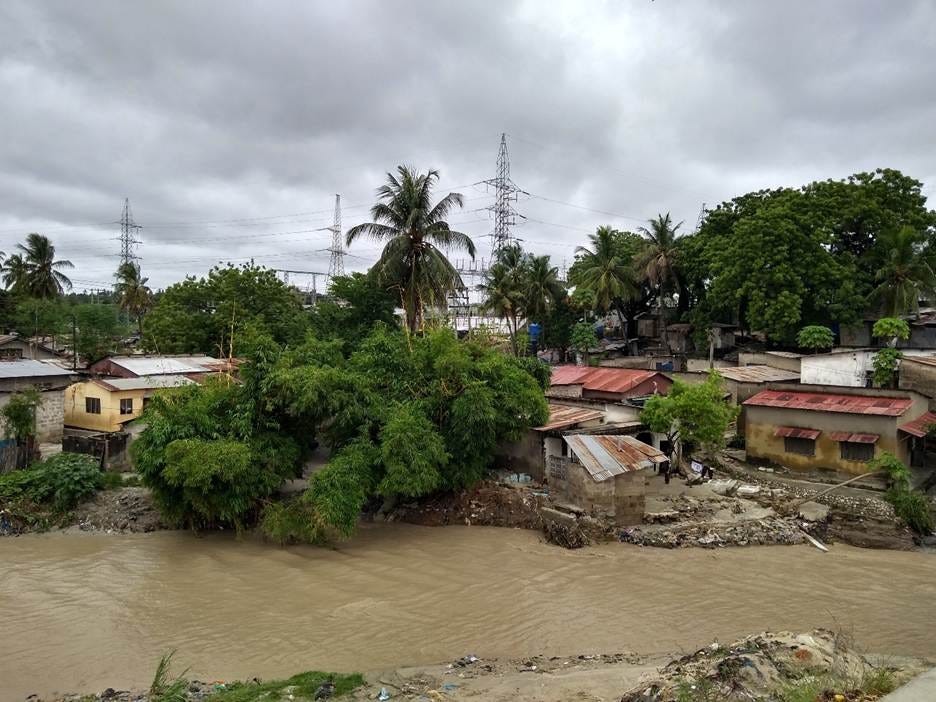
The divide itself is easy to visualize. The chapter offers a few photos, compressed and in black and white. Here, for example, is the color version of the neighborhood near the Ubungo Power Plant, shown on the same page as the quote above:
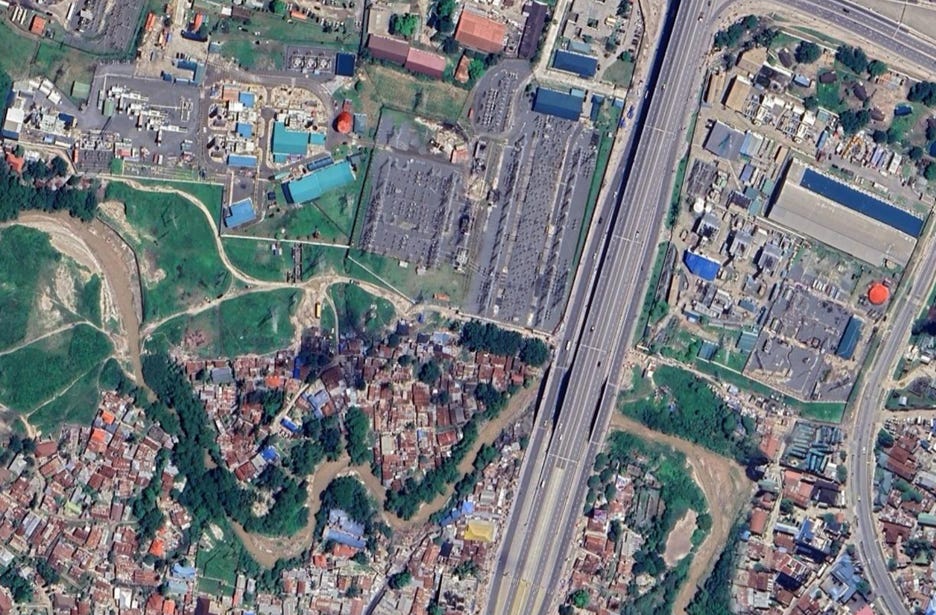
And here is the same area, viewed from above:
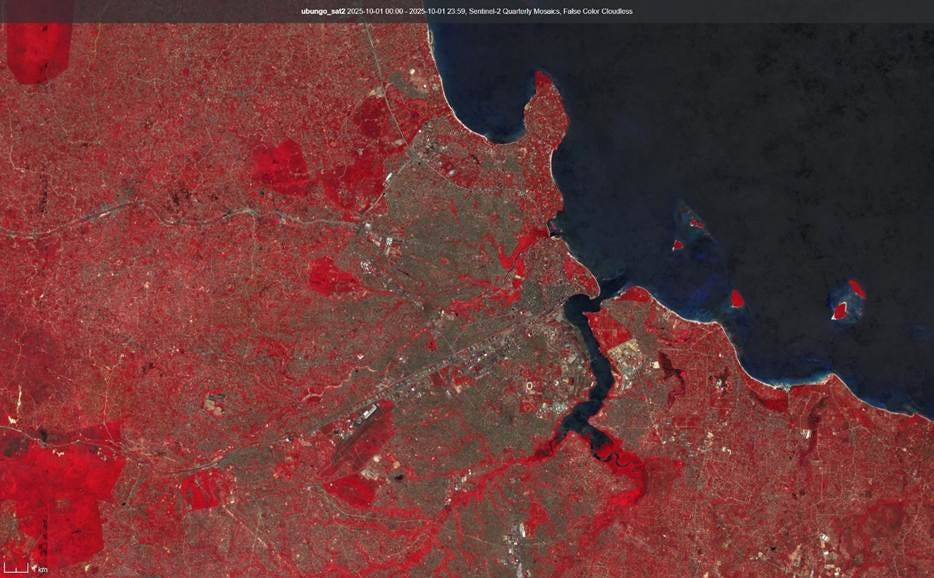
In fact, the patterns are even more easily viewed in infrared images of the entire city, showing the grey sprawl of the city’s peri-urban informal settlements, its corridors and clusters of industry, its dense downtown business district, and its wealthier neighborhoods to the north of the urban core. In these infrared images, vegetation is colored in red, while human settlements appear in greyscale:
Nonetheless, this bifurcation is not as strict as it seems. Much of the chapter is dedicated to detailing exactly how the “formal” and “informal” spheres are interdependent and coproduce one another:
Overly simple divides between the ‘formal’ and ‘informal’ economies, between the ‘slum’ and the apartment complex, and even between the urban and the rural do not quite capture the intricate interdependence of subsistence and speculation that defines life in such a place. Dar es Salaam is a fragmented city, certainly, but its many fragments of speculation and survival are also interdependent, woven together through the very rituals of commerce that produce this unevenness in the first place.[2]
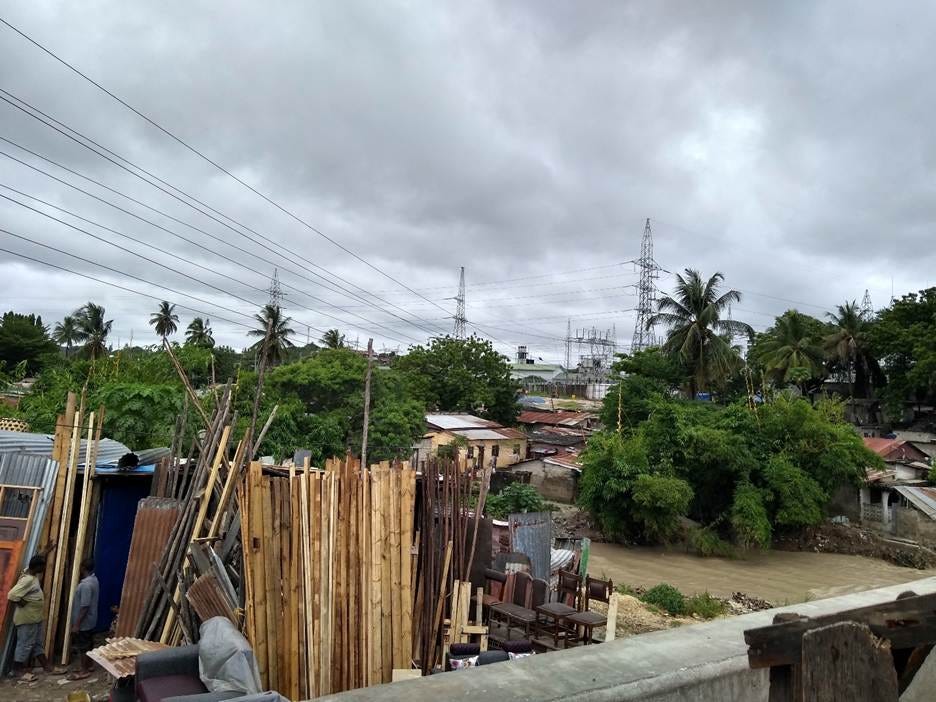
We can see this in the same neighborhood, where small “informal” carpentry workshops have popped up across the river from the large “formal” power plant, both forms of industry serving local demand in different ways:
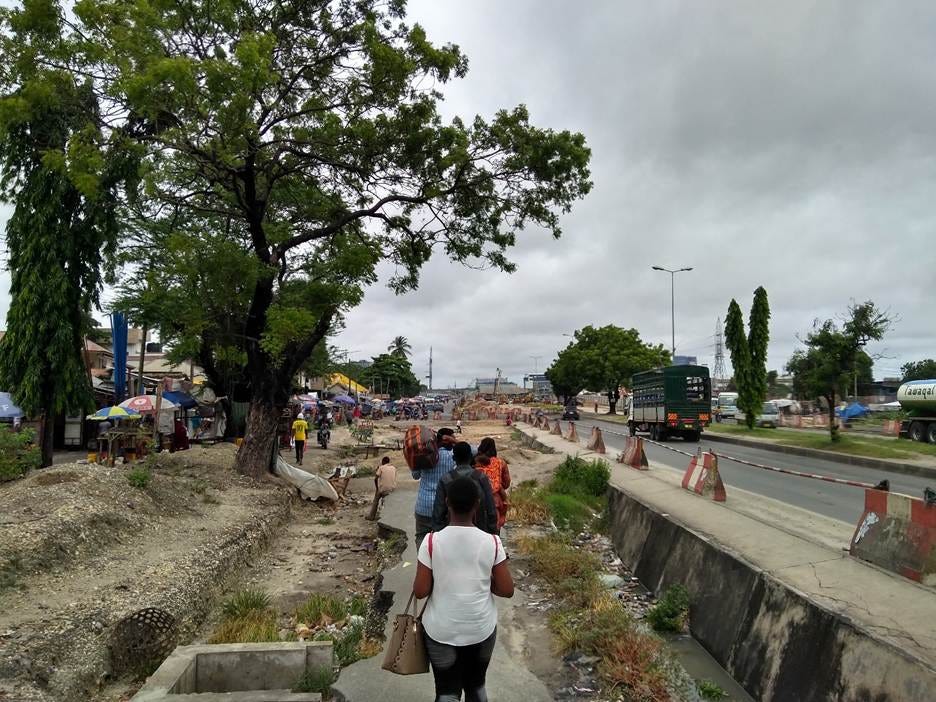
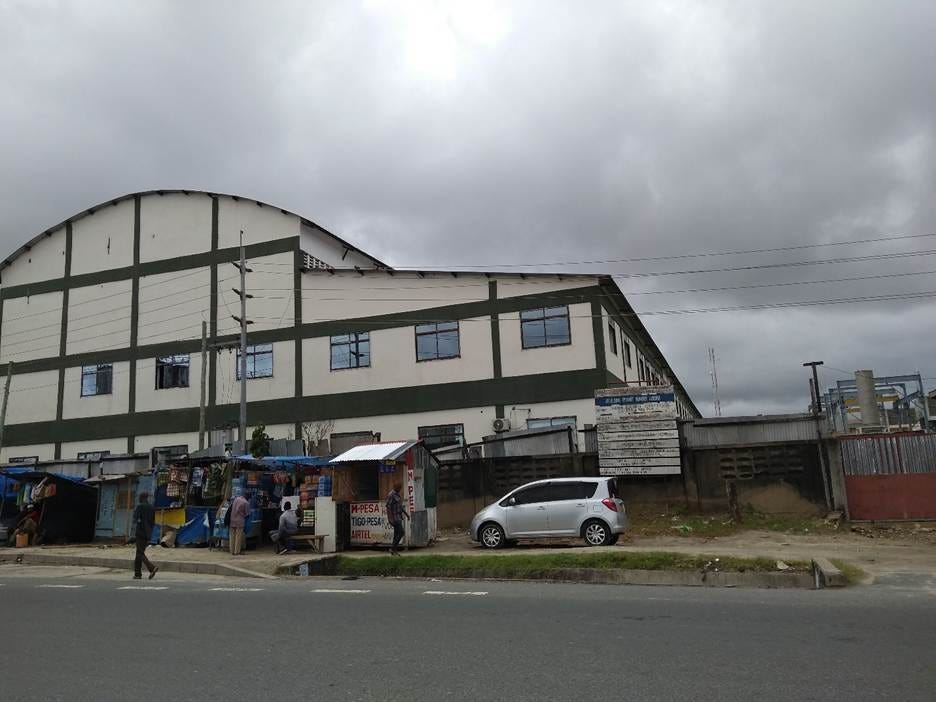
Similarly, small retail stands are propped up in the area around the power plant, often against the walls of more formal industrial complexes, serving foot traffic walking up and down the crumbling sidewalk along Nelson Mandela Road:
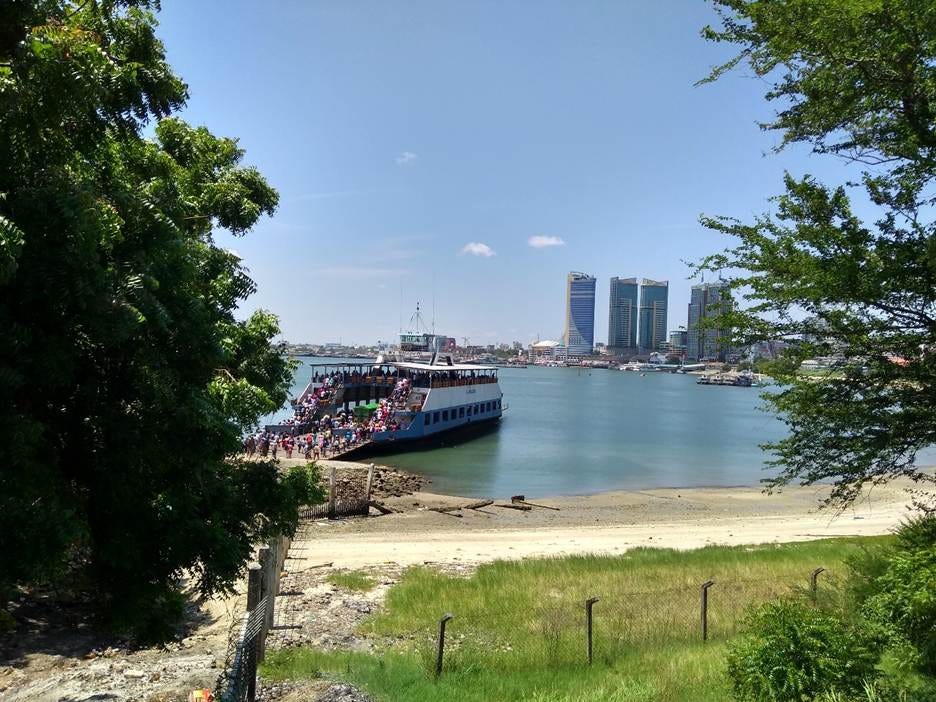
These exist in contrast to the sparkling downtown cityscape formed by new skyscrapers in the central business district:
Even travelling through such areas is marked by a divide between the more formal rapid transit buses rolled out by the city, which require a ticket, and the traditional, semi-formal dala dala system, defined by packed minibuses with a driver and a conductor who hangs out the open door, taking cash payments and yelling the locations out to prospective passengers:
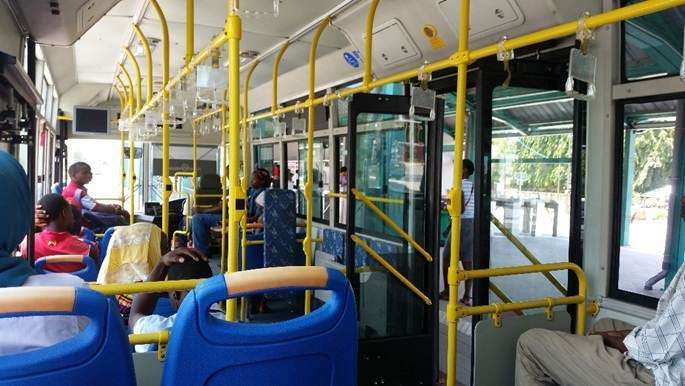
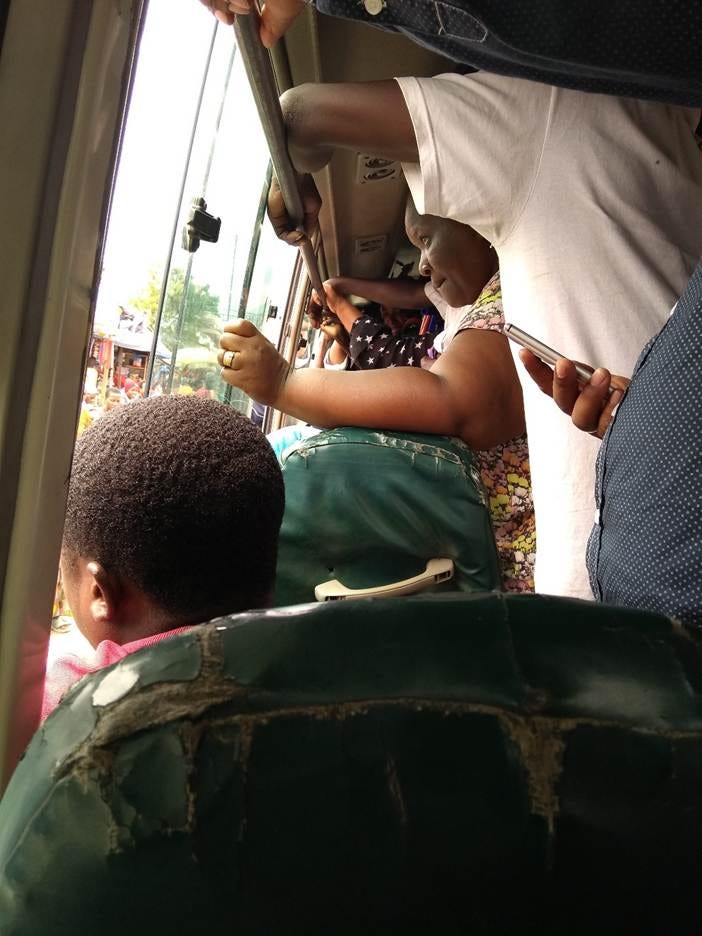
As the chapter documents, the conflictual symbiosis of modern urban development and its “informal” shadow has repeatedly resulted in contradictory pressures, simultaneously expanding the sphere of informal commerce conducted by wamachinga (petty traders) while also seeing successive government attempts to rein in the sector and even “cleanse” the city of informal market clusters. The largest of these clusters is Kariakoo, which has served as the center of debates over the informal economy and “urban blight.” As described by Dorothee Braun:
“Cleansing the city” has been coined as the new slogan, through which the many and continuously growing numbers of such “little lives” are to be erased from the city scape. Street vendors are said to block streets and pathways, destroy the environment, or endanger their own lives as they operate within close proximity of safety hazards. Their non-uniform, shabby, and mushrooming presence unsettle the view of visitors, tourists, government, and business partners alike. They occupy spaces that should be transformed into modernity in the interests of capital.
While the former Magufuli administration took a conciliatory path that sought to gradually pull wamachinga into the formal sphere through a permissive licensing system, the subsequent Hassan administration returned to older practices of police crackdown and mass eviction, resulting in deadly protests.
But the market keeps returning, pursuing its own forms of modernization. For example, as in Kenya, much of the informal economy in Tanzania is moving toward an increasingly cashless system rooted in M-Pesa transactions:
The YouTube video above is from one of my favorite channels, “Explore with Bertin,” who mostly posts long, sparsely-narrated walks through various places in Tanzania (and now elsewhere across the continent), including many of the places I did my own field work in 2020. Here, for example, is his 2025 exploration of Ubungo, where the above photos were taken five years prior:
Particularly noteworthy is the East Africa Commercial & Logistics Center (EACLC), opened in 2025 by the Shanghai-based Linghang Group via its Weihai Huatan Supply Chain Management subsidiary, which opened in 2025:
As I explained in “A Tale of Two Ports,” written for Spectre, these sort of wholesaling trade links are far more central to China-Africa relations (and to “global China” dynamics in general) than the more widely-reported role played by Chinese financiers or Chinese construction contractors in infrastructure projects – whose relative weight in such projects is often drastically exaggerated:
Trade deficits with a number of Asian countries have increased across Sub-Saharan Africa since the year 2000, the most sizable of which are those with China and India. Both have become increasingly important suppliers of consumer goods to the region, with China supplying some 15.1 billion USD in 2021, and India 13.2 billion USD. Meanwhile, China has become the major supplier of capital goods (26.4 billion USD), machinery and electrical equipment (23.2 billion USD), and intermediate goods (15.2 billion USD).
Many of the wamachinga selling goods in Kariakoo would travel regularly to Chinese cities like Yiwu and Guangzhou to purchase wholesale goods. Here, for example, are some photos I took in 2024 in Yuexiu District in Guangzhou, famous for its large population of African traders:
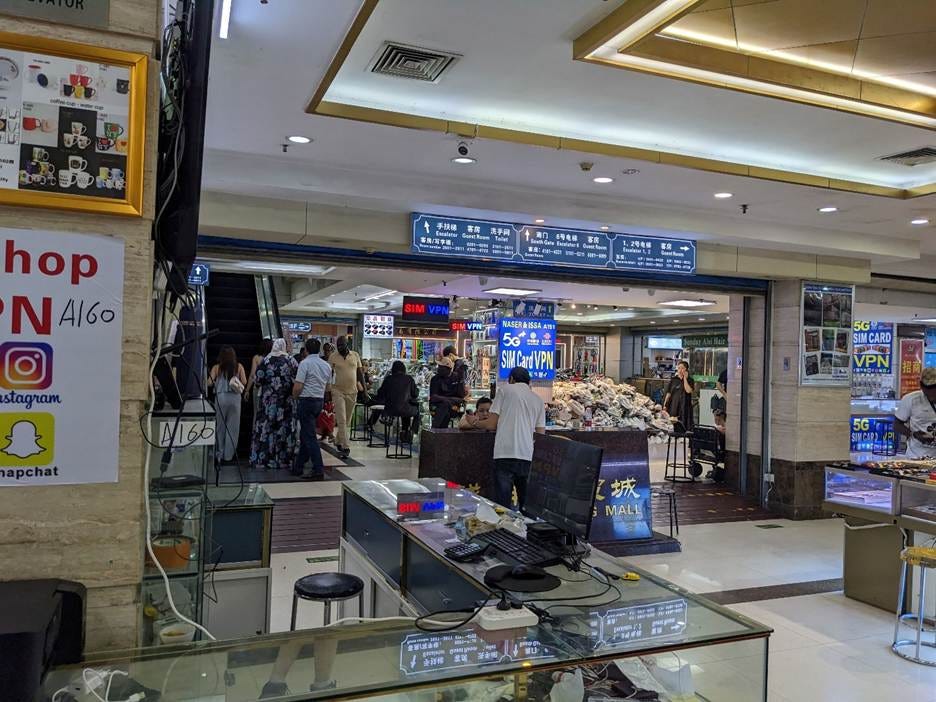
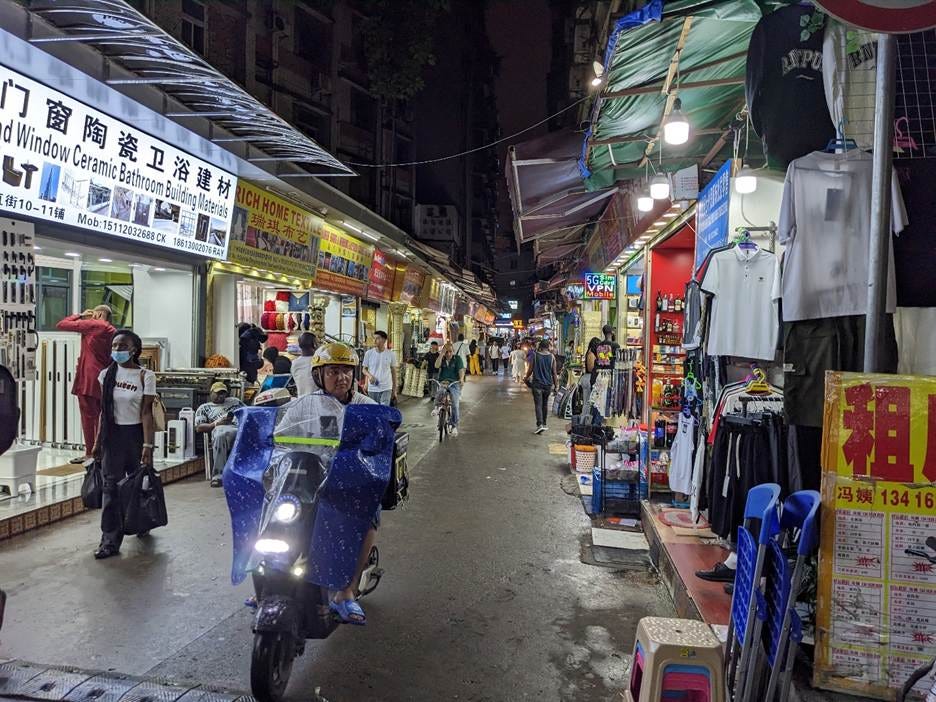
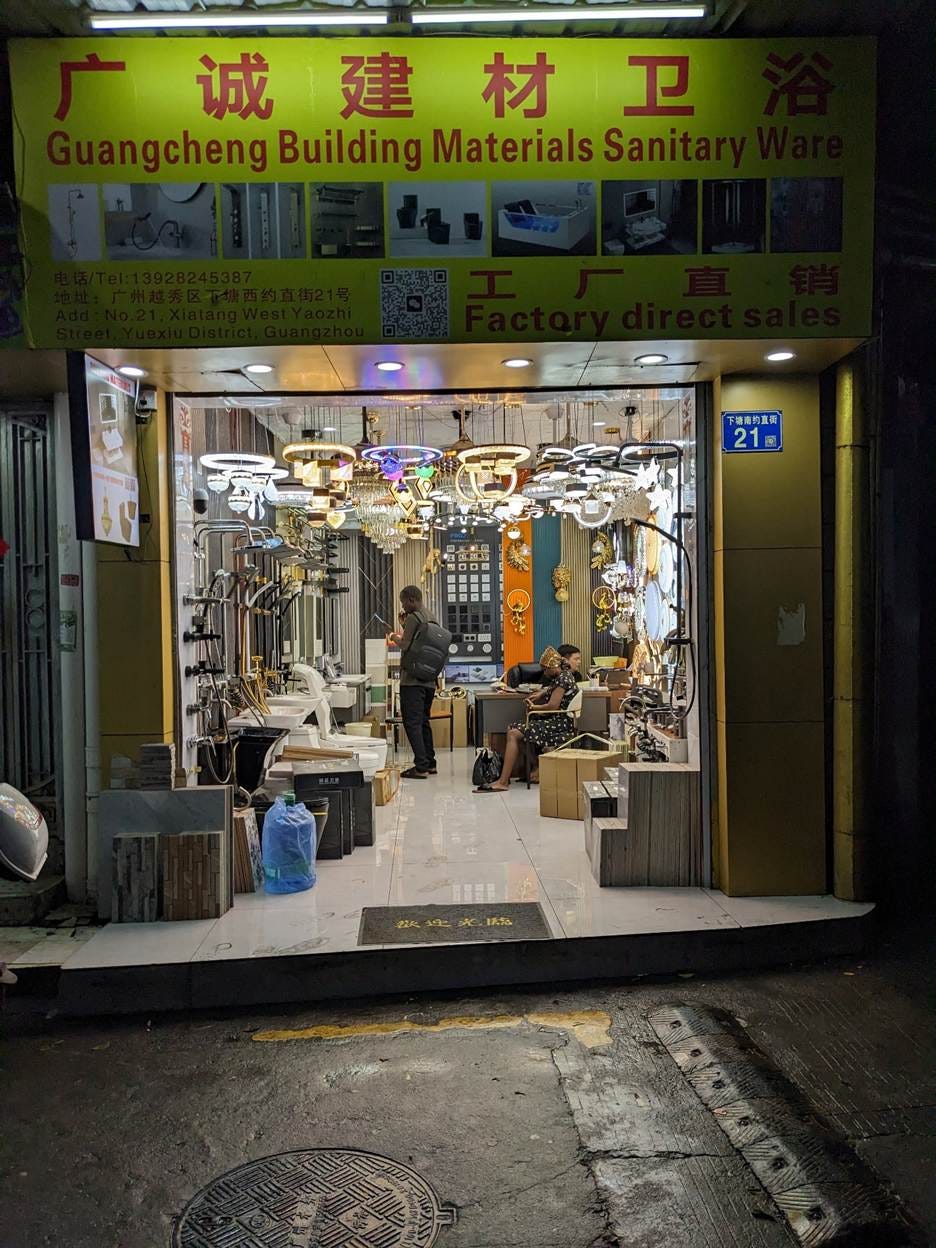
Though my fieldwork was geared toward finding Chinese factories operating in Dar es Salaam, the reality on the ground was that both Chinese traders and African traders sourcing from China were far more important to the city’s economic life, while many of the “Chinese” megaprojects touted in the media were in fact financed by traditional multilateral institutions, with their on-the-ground work performed by Chinese construction contractors. Thus, trade and construction were the two fields in which Chinese economic influence in the city were felt most clearly. The face of “China in Africa” is ultimately less the port or hydroelectric megaproject and more the small Tecno stand selling feature phones or the Tanzanian worker piloting a Sany bulldozer. Similarly, the real anchor investments by Chinese firms have not been the minor manufacturing facilities scattered throughout the city so much as wholesale warehouses and trade complexes, such as the EACLC.
In this fashion, the daily life of Tanzanians in both city and countryside is increasingly interwoven with the material mesh of the planetary factory. Whether employed “formally” or “informally,” everyone has a phone made by a Chinese white label manufacturer running an OS designed in Shenzhen or Hangzhou on a network set up by South African firm Vodacom, they buy polyester blankets manufactured by Chinese firms in Jiangsu or Zhejiang via Kenyan financial services firm Safaricom’s digital payment platform M-Pesa, or trade in clothing produced in Cambodia or Bangladesh and originally sold in the US or EU then donated and packed into bundles called mitumba to be traded and re-traded in local markets across the country. While this commercial activity enables access to otherwise inaccessible goods, it can also suppress local industry. The mitumba market spurred by donated clothing from the wealthy countries, for example, is widely credited with devastating local textile and garment production across the country. In other words, even while integration with the global market amplifies local commercial activity, it also brings with it attendant dependencies.
In Dar es Salaam, which continues to rank among the world’s fastest-growing cities, expressions of these dislocations abound. Popularly, they are expressed through recurrent panics over underemployed and socially unmoored young people, particularly men, portrayed in the negative as wahuni (“thugs” or “hooligans”). More positively, however, new cultural practices also emerged to express the everyday life of the booming metropolis, building on long lineages of art and music. The chapter focuses in particular on the newest wave of musical expression, found in singeli, a frenetic genre of dance music that emerged from the uswahilini adjacent to the industrial districts where I had done my own fieldwork:
The genre is defined first and foremost by its breakneck pace, anywhere from 180 to 300 BPM, overlain with rapid-fire Swahili lyrics. It also makes aggressive use of samples, the bulk ofwhich are drawn from local radio, from the traditional music of various ethno-linguistic groups within the region, and from field recordings made within the uswahilini themselves. The average singeli song contains no less than twenty such samples, most of which are compressed and accelerated to emulate percussive instruments. The result is an extremely energetic, rapid-fire sound that mirrors the desperate hustle of urban life.[3]
One of the songs referenced in that chapter is “Mwanaume Mashine” (Machine Man) by Msaga Sumu, in part because it’s machinic themes mirror the Chinese worker poetry explored in previous chapters. However, another major reason is because the song’s music video is itself embedded in the uswahilini, offering a panoramic tour of the type of proletarian neighborhood that birthed the genre itself:
“Tatizo Pesa” (Money Problem) by Jay Mitta is another, featuring a similar visual language, with its lyrics focused on the unending hustle and grind of life in the informal economy:
Initially, the genre itself was treated as a threat. By bringing together un- and underemployed youth in raucous gatherings, it invoked the old specter of proletarian congregation that had triggered the original “wahuni raids” during the colonial period, which were emulated by the postcolonial government. According to one early explainer from Pan African Music in 2020:
… the genre first raged in the block parties of Manzese and Tandale, two working-class districts on the outskirts of Dar es-Salaam at the kigodoros. Marathon party sessions named after the foam mattresses dancers would collapse on from exhaustion.
…
Up until last spring, local police regularly interrupted block parties, cutting off the power supply and even arresting Jay Mitta during one of his shows. But Jay asks to skip the questions on this: Singeli is not protest music. So why would it bother President Magufuli’s regime – nicknamed “tingatinga” (“the bulldozer” in Swahili) for its highly repressive policy against any form of opposition since being elected in 2015?
An initial lead suggests that because of its popularity amongst unemployed youths, singeli was associated with uhuni, i.e. gang violence and drug trafficking. According to Rehema Tajiri, it was more of a misunderstanding with the authorities. “The shows attract a huge audience. Quite naturally, sometimes there are excesses and misbehavior. The government thought that singeli was the only reason behind this, but I don’t see anything in it that’s threatening to national security…” she regales, laughing.
Similarly, the genre’s widespread sampling of traditional music caused friction with the taarab community, who saw singeli as a means through which their art was degraded and vulgarized, and it was initially rejected by the Afro-pop Bongo Flava scene for not being “real music.” But when the genre continued to gain popularity, the narrative quickly switched. Soon, almost every major Bongo Flava artist was including singeli elements in their newest hits. Meanwhile, singeli began to sanitize itself in its transition to the mainstream, adopting conventional features of Afro-pop and Afro-beat aesthetics. Take, for example, Balaa MC, part of the more sanitized second wave of the singeli scene, whose rhythm is more digestible and whose visuals adhere to the more standard party-footage music video format:
Around the same time, Bongo Flava artists began also incorporating singeli musical structures under more conventional vocals, in a pattern that has now become common within Tanzanian Afro-pop. See, for example, this piece by Professor Jay:
When the genre broke into the global electronic music mainstream in the late 2010s and early 2020s, it was even embraced by the government that had once raided the original street parties that birthed the genre. According to the PAM piece quoted above:
Perhaps due to an opportunist attempt at populism, the Tanzanian authorities today seem to have fully embraced singeli. “The government has understood that we are not thugs and that we are promoting good things towards young people,” said Rehema Tajiri. Suddenly, Abbas – manager, driver and translator – abruptly interrupts her: “the government supports singeli, they play it in political assemblies, official meetings and even at the state palace, they say. We can freely request and obtain visas to go and play abroad. It’s all that matters. Our president is good for Tanzania, he is great.”
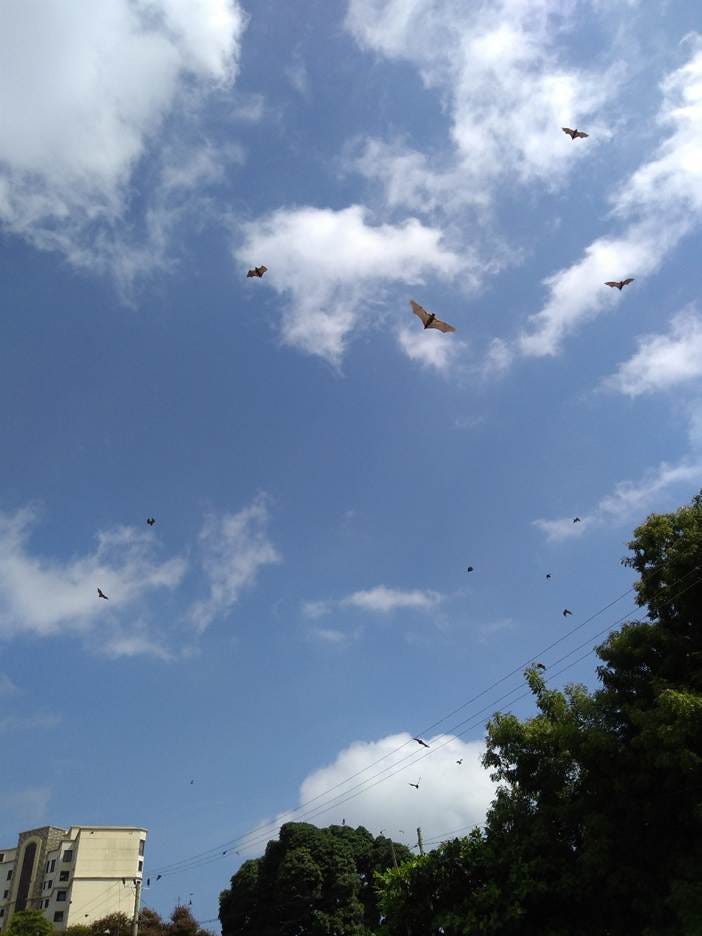
As a result, the genre is today deeply interwoven in the life of the city and nation, from the uswahilini all the way to the presidential palace, its sounds as prevalent as the fruit bats that nest in the mangrove forests and the old trees along the roadways, swarming in the morning sky. It is an embodied sound that is, ultimately, best heard in its own equatorial ecosystem: bats swooping over informal market stalls perched on the sandy coastal soil as traffic roars gently in the distance and the waves grind in the background, ships lined up in the distance waiting to enter the port. And it is perhaps the sound of a certain commercial future for the city, evident in the bustling commerce of the wamachinga in Kariakoo, moving back and forth between the Swahili Coast and the wholesale markets of Southern China, cutting out new trade networks slowly rebalancing the flows of matter and power over the surface of the Earth.
Like any other form of informal commerce, the genre is also an export, with singeli artists playing major festivals across Europe and catching the attention of the biggest electronic labels. Formerly relegated to .mp3s traded by hand in narrow streets between hand-built shanties and local “Radio FM” broadcasts, it is now widely accessible to a global audience via platforms like Bandcamp and Spotify. Of particular importance in its promotion has been the Uganda-based Nyege Nyege Tapes label, affiliated with the eponymous music festival, which released some of the first globally-recognized hits from artists like Duke, Jay Mitta, and Sisso:
The playlist below is centered on singeli but also situates the genre within the longer arc of Tanzanian music history. It begins with modern recordings of more traditional ngoma and taarab, before gradually shifting into more than an hour of singeli tracks:
[1] Hellworld, pp. 588-589
[2] ibid, p.591
[3] Hellworld, p.626